Meet Christian: Creating Sustainable Employment Outcomes on the Gold Coast
13 October, 2026
Finding the right job is only one part of achieving a positive employment outcome. For people living with neurological conditions, ongoing support, open communication and the right workplace environment can make an important difference.
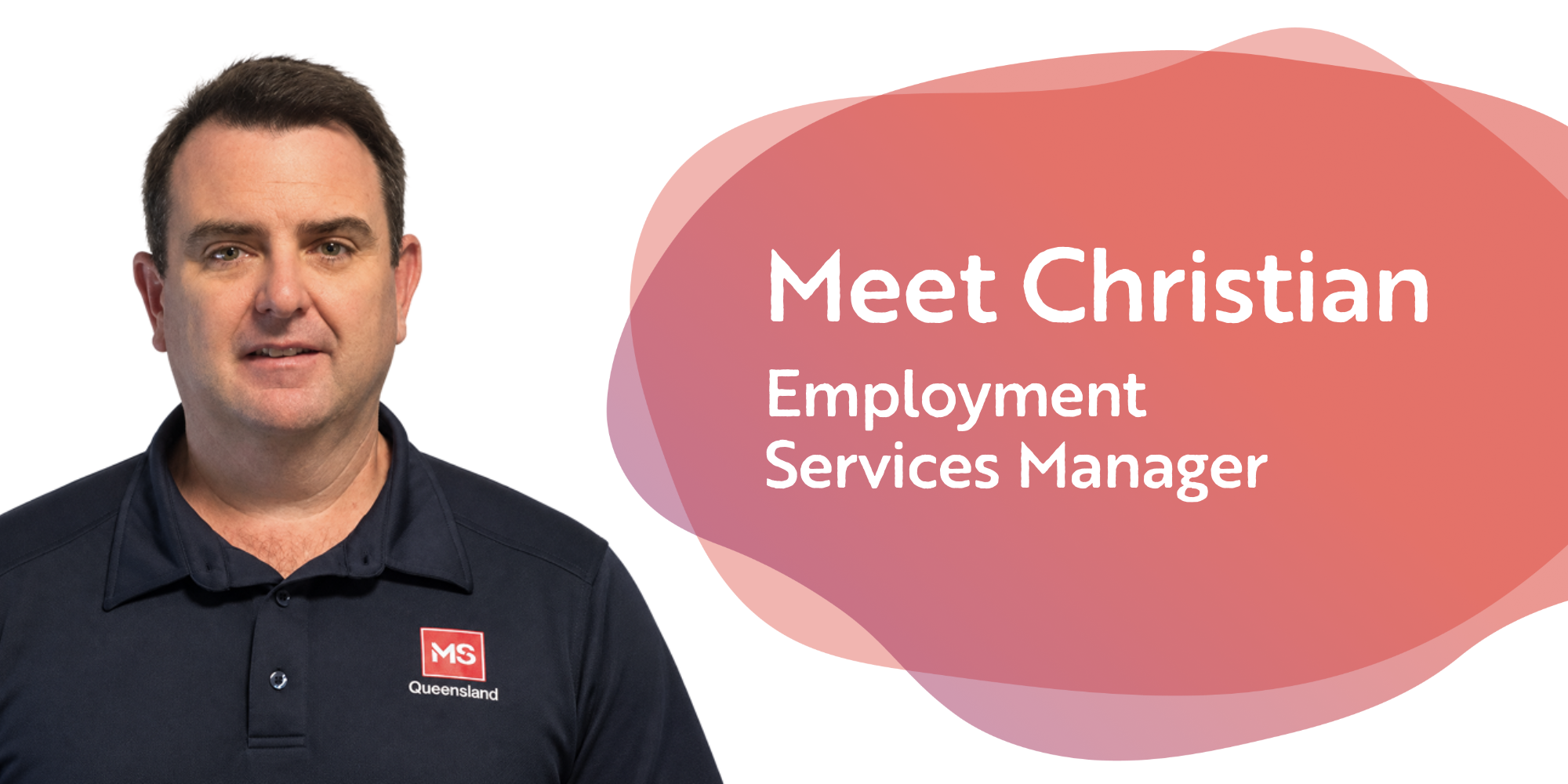
We spoke with Christian, MS Queensland’s Employment Services Leader on the Gold Coast, about what effective employment support looks like, the importance of strong relationships between participants and employers, and why success can mean much more than simply securing a job.
Can you tell us about your role with MS Queensland on the Gold Coast and what led you to a career in employment services?
I’m the Employment Services Leader for MS Queensland on the Gold Coast, leading our team from the Southport office.
We support people living with neurological conditions to find and maintain meaningful employment. That support can look very different depending on each person’s strengths and barriers, and we draw on our experience and community networks to achieve the best possible outcome.
I started working in disability employment 15 years ago because I wanted to support people to achieve their employment goals. Seeing the positive flow-on effect employment can have on other areas of someone’s life, as well as their family, is something I continue to find rewarding.
From your perspective as a leader, what does genuinely effective employment support look like for someone living with a neurological condition?
Employment support can take many forms, from helping someone complete online job applications through to working with an employer to create a suitable role.
One of the most important things I look for is ensuring the Employment Development Consultant and participant are on the same page and working towards the same goal.
Communication is key. Once someone finds employment and, with the participant’s permission, the consultant can communicate openly with the employer to discuss any workplace adjustments that may be needed.
What are some of the misconceptions about neurological conditions and employment that you would most like to change, among job seekers and employers?
One concern we sometimes hear from participants is that disclosing their neurological condition could cause an employer to treat them differently or look for a reason to let them go.
In my experience many employers appreciate having the information they need to support their employees and make workplace adjustments where required.
From an employer perspective, a common misconception is that someone living with a neurological condition may be less reliable or frequently unable to work.
When someone is placed in a supportive environment that matches their strengths, they can perform extremely well and make a valuable contribution to the workplace.
How important is the relationship between the participant, employment consultant and employer in creating sustainable employment outcomes?
Building strong relationships between everyone involved is key to achieving sustainable, long-term employment outcomes.
Regular communication between the Employment Development Consultant and employer means smaller issues can often be identified and addressed early, rather than being allowed to escalate.
Maintaining communication with both the participant and employer can also help clarify expectations, address misunderstandings and keep everyone working towards the same outcome.
How do employment consultants and employers work together to support someone to thrive long-term in the workplace?
The way an Employment Consultant works with an employer will depend on the participant and the workplace.
Some employers appreciate having the consultant visit the workplace regularly. This gives us an opportunity to better understand the participant’s role and explore whether any adjustments could help them perform at their best.
Other workplaces may not be suitable for regular visits, so support might instead involve phone check-ins with the employer and separate conversations with the participant outside work.
The best outcomes happen when there are open and effective lines of communication between the employer, participant and Employment Consultant.
When you look at the work your team does, what does success look like beyond helping someone secure a job?
Success can look very different from one participant to another.
Seeing someone become more confident in how they approach their job search is progress. Hearing that someone is getting out of the house more, engaging with their community and building confidence, even if they haven’t secured employment yet, can also be a significant success.
Sometimes participants have also experienced challenges finding the right support for their health needs. If we can help point them towards appropriate support and that contributes to improving their circumstances, that can be another positive outcome.
Employment is important, but progress towards greater confidence, participation and wellbeing matters too.
What would you say to a Gold Coast employer who wants to create a more inclusive workplace but isn’t sure where to start?
I’d encourage any Gold Coast employer interested in creating a more inclusive workplace to reach out to our Southport team and have a conversation.
Even if they only have one small question, that conversation can often uncover other opportunities, ideas or solutions they may not have previously considered.
There’s no expectation that an employer needs to make changes immediately. They can take the information away, consider what it means for their workplace and decide what steps are right for them.
Reaching out and starting the conversation is already an important first step towards understanding the benefits of creating a more inclusive workplace.
Request a callbackRelated posts

Chronic Fatigue and Employment: Support to Stay in Work or Find the Right Job
Movement Matters: The Role of Neurological Physiotherapy