Meet Brooke
26 October, 2026
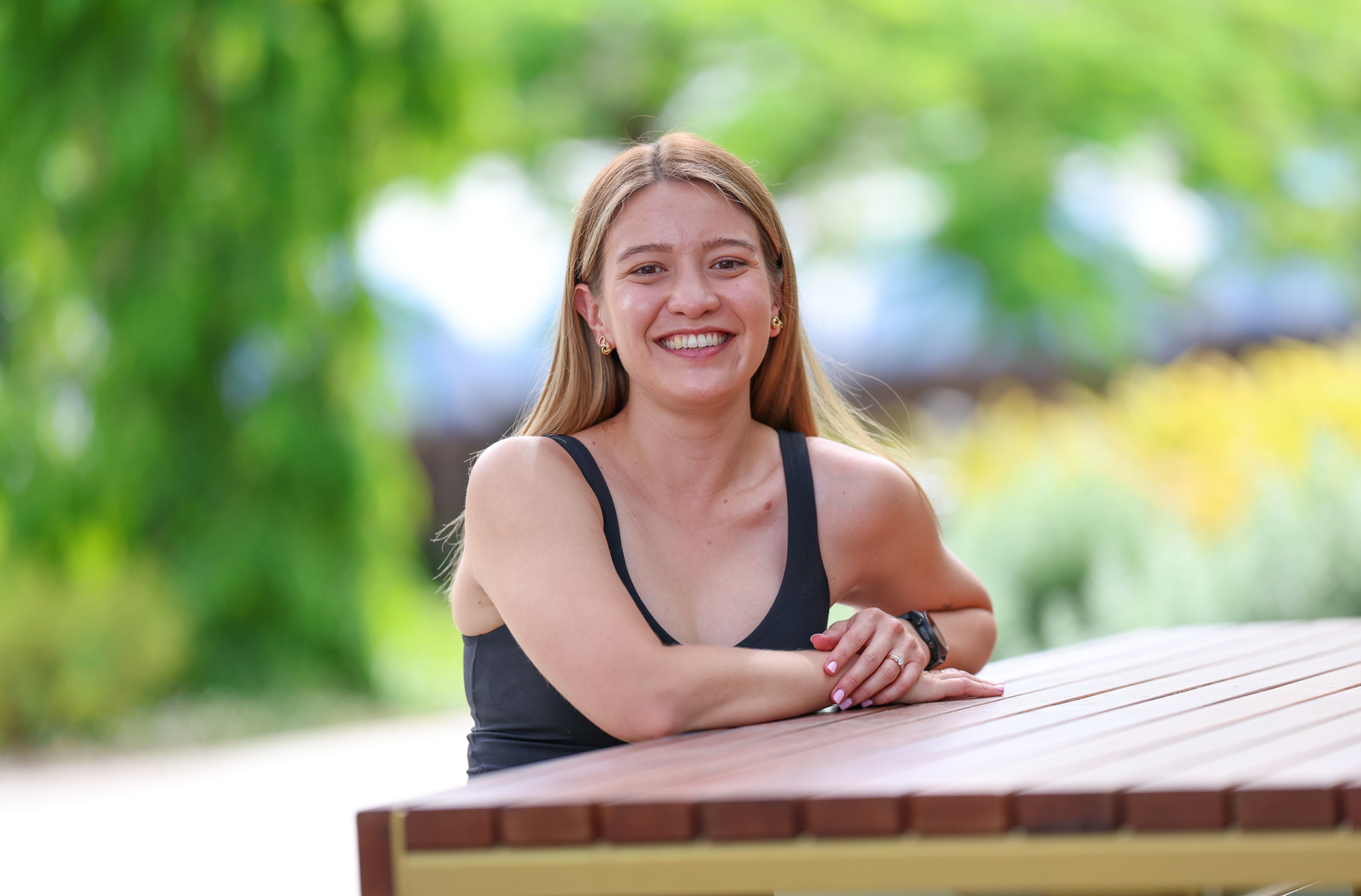
When Brooke Highley learned she had multiple sclerosis (MS) in 2024, she was working as a nurse at Queensland Children’s Hospital, caring for sick children and their families.
Outside of work, Brooke was an avid swimmer, distance runner and small business owner who regularly filled her days with activity.
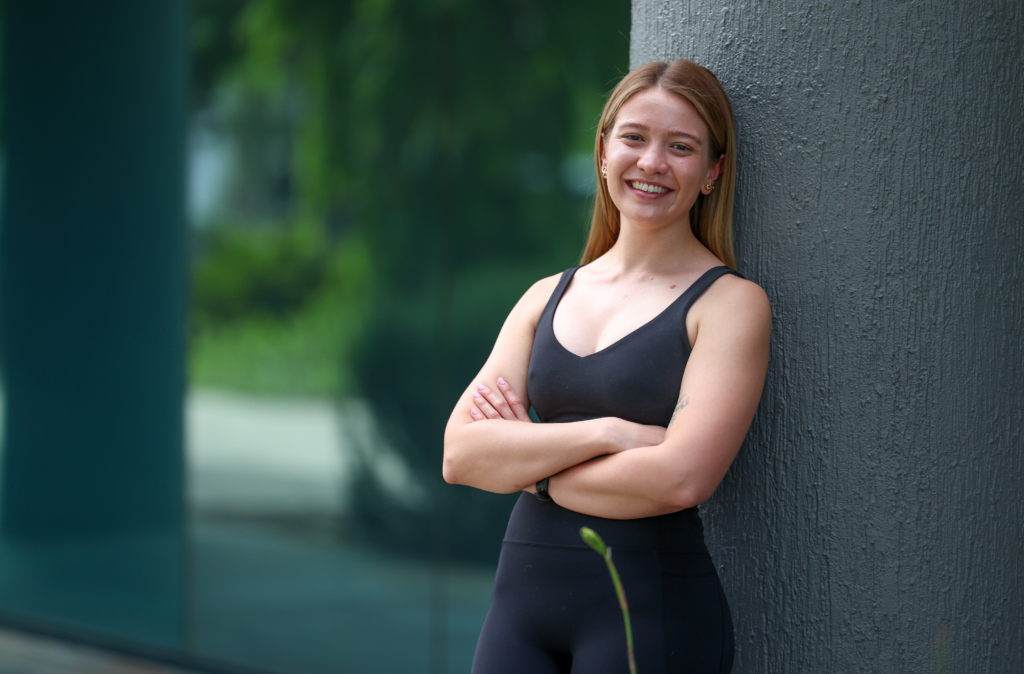
In the 18 months leading up to her diagnosis, Brooke experienced headaches, fatigue, dizziness and other symptoms. At the time, she attributed them to exercise, shift work, stress or simply needing more sleep.
“My symptoms weren’t really bad enough to worry the doctor with,” Brooke says.
That changed when the right side of her face, neck, chest and upper arm went numb and then began to feel heavy.
Following a series of tests, doctors diagnosed Brooke with MS. Despite her healthcare background and experience in neurological care, the diagnosis still shocked Brooke.
Her medical background has since been both a help and a hindrance as she adjusts to life with MS.
Working in healthcare means Brooke is surrounded by colleagues who understand neurological conditions. One challenge, however, is helping others understand a condition they often can’t see.
Recognising the signs
“I’d had daily headaches, heat like fire sensation all over my legs, strange intense headache sensation feeling as if my head was going to explode, assuming it was a migraine. Both eyes shaking, fatigue not relieved by sleep, light sensitivity, I was seeing halos around lights, pain behind my eyes—all for about 18 months. Since these feelings came and went, and I didn’t give them too much attention and put them down to stress or needing more sleep.
“I like being fit—going for runs, going for swims. I’ve always kept fit and so I had put down some of my symptoms to over-exercising, shift work and/or having a pinched nerve causing numbness.”
“Looking back, I can see that my balance, dizziness, memory and fatigue worsened over that time, but it was gradual and not constant, so I thought I just needed more rest.”
The triggering point for Brooke was when her right side went numb, and then heavy.
“The right side of my face, neck, chest and upper arm went somewhat numb, complete sensation change. Whilst I thought it was odd, I just assumed I may have pinched a nerve in my neck (since I got a knock to the head a few days before).
“In my initial GP visit, I was told it was muscular. A few days later, when that side of my face started to get heavy, I was getting concerned and thought I was having a stroke! I then went back to the GP (a different one), who agreed that this was not normal.”
Working in healthcare has given Brooke the freedom to discuss her condition openly with colleagues.
“I’d like people to know that you don’t have to look physically unwell to be unwell.”
“I really didn’t want people to treat me differently just because of my diagnosis,” Brooke says.
“To everybody else, I look rather normal. I enjoy being fit. I appear healthy. I don’t have many physical deficits, which I’m incredibly thankful for! But that makes it difficult when everyone sees me and says, ‘You look so well!’. What do I say to that? Thank you? That’s why this is called the “invisible disease”. Just because you can’t see the symptoms doesn’t mean they’re not there, impacting my day-to-day life.”
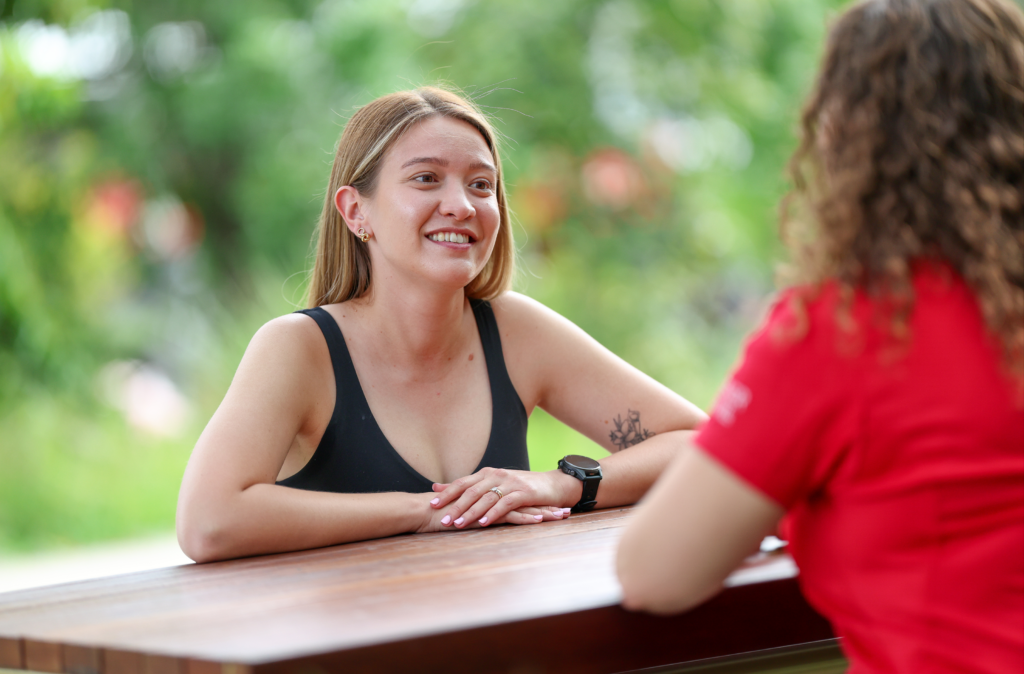
Brooke experiences dizziness, headaches, brain fog, fatigue, forgetfulness, balance issues and difficulty focusing. Many of these symptoms aren’t always visible to those around her.
Seeking answers and support, Brooke reached out to MS Queensland to better understand the support available.
“I called the MS Queensland nurse to find out more about my symptoms, the condition and general information about treatment options and other medical support.”
Running towards a challenge
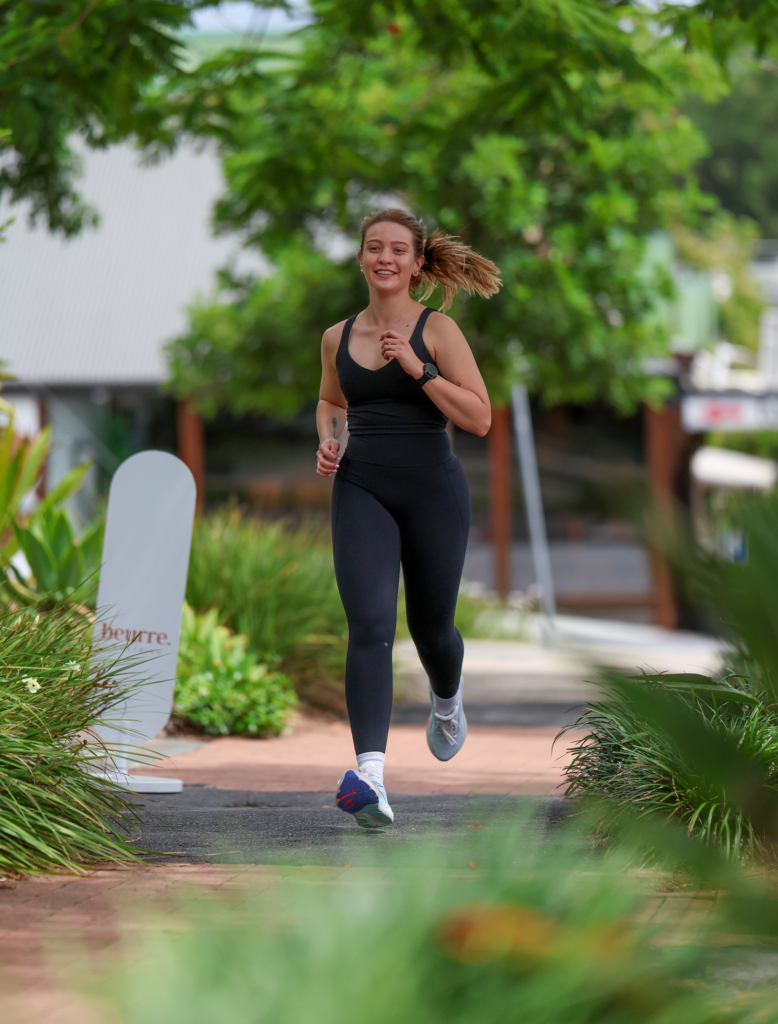
Fitness has always played an important role in Brooke’s life. In response to her diagnosis, she decided to channel that passion into a new challenge.
“Straight after I was diagnosed, I decided to run a marathon. Part not wanting to accept the diagnosis, part stubbornness to prove to myself I could do it, and part cause-related wanting to help raise funds for MS Queensland.”
Brooke completed the marathon alongside friends from her run club, Rocks Riverside Runners.
“The feeling was euphoric.”
Running the marathon became a way for Brooke to prove to herself that her diagnosis would not define her.
Living with MS has also changed how Brooke approaches her work, energy and future.
Since her diagnosis, Brooke has moved into a non-clinical surgical coordinator position. She has also stepped away from her skincare business and reprioritised where she spends her energy.
Looking ahead
At 30, Brooke and her husband are also looking towards starting a family. The prospect has brought the uncertainty of living with MS into sharper focus.
“I know I can’t fall down the rabbit hole of worry, but I do.”
“I contemplate a future where my husband becomes my carer and I’m potentially in a wheelchair. What will that feel like? I don’t know. It’s the uncertainty of it all. Let’s be honest: life itself, is uncertain, but this adds that extra layer of uncertainty. Thinking about the future has had a really big impact on my mental health.
“That said, I can’t live in the future. It’s not here yet and I have to keep reminding myself of that.”
Like many people living with MS, Brooke now finds herself constantly balancing her energy between work, exercise, family and social activities.
“The biggest impact has been grieving my ‘past self’, how I now think about my future and the future of my family.”
Despite that uncertainty, Brooke remains pragmatic and hopeful.
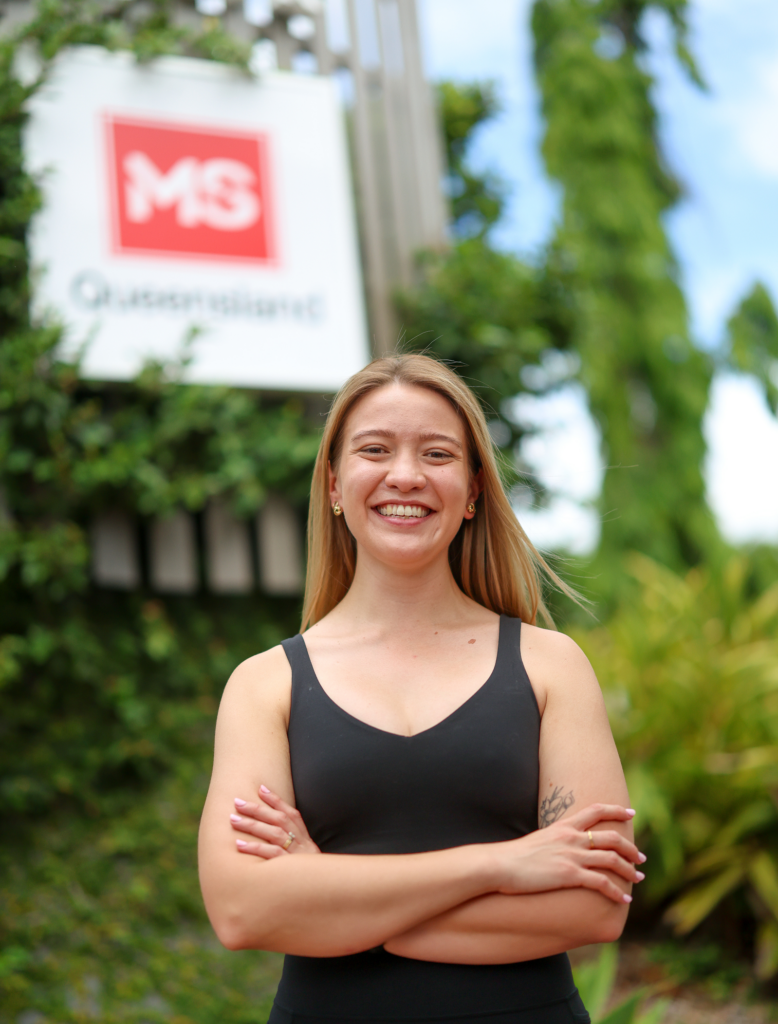
“I have to remind myself to ask for help, support and remember MS Queensland is there for support.”
As a nurse, Brooke says her instinct has always been to help others rather than ask for help herself.
Fitness remains an important part of Brooke’s daily routine, and she credits exercise with supporting both her physical and mental wellbeing.
Looking ahead, Brooke hopes greater awareness, research and support will provide more certainty for the people diagnosed in the future.
“I’m hopeful that with more awareness of neurological conditions and more funding into the services and research, the next person to be diagnosed with MS will have more certainty about their future. In the meantime, I know MS Queensland is the safety net we can all rely upon.”
Related posts
Chronic Fatigue and Employment: Support to Stay in Work or Find the Right Job
Meet Christian: Creating Sustainable Employment Outcomes on the Gold Coast