Meet Daryl
10 July, 2026
When Daryl Cullen first discovered MS Queensland, he was in a dark place, living “like a hermit” and experiencing up to 20 falls a day. But, with just one call, everything changed.
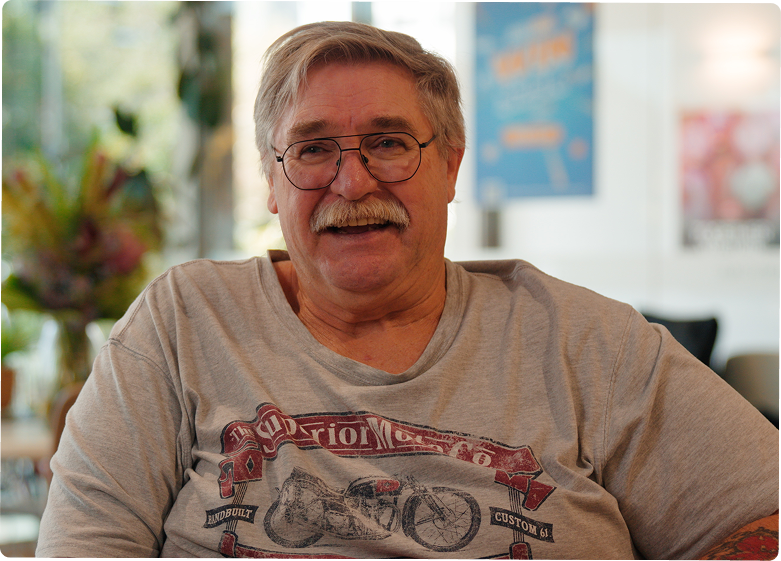
“All of a sudden, we had everyone on the phone, offering to do this and organise that. We’d gone through so many years navigating a neuro condition without help that it was completely overwhelming.” Daryl said.
Having had his first stroke in 2014 and his second two days before Christmas 2017, Daryl was subsequently diagnosed with epilepsy and, later, Parkinson’s.
“My wife, Cathy, has always been there for me. But I used to get into that dark area where I thought if I wasn’t here, she wouldn’t have to worry and look after me. I wanted to go for a long walk and never come back.”
All it took to turn things around, Daryl says, was access to the right people with the right expertise.
“We’d been jumping through hoops to get support through the NDIS (National Disability Insurance Scheme) but I just got knocked back and knocked back, until the day I saw something about MS Queensland helping people with all kinds of neurological conditions.
“That’s when everything changed.”
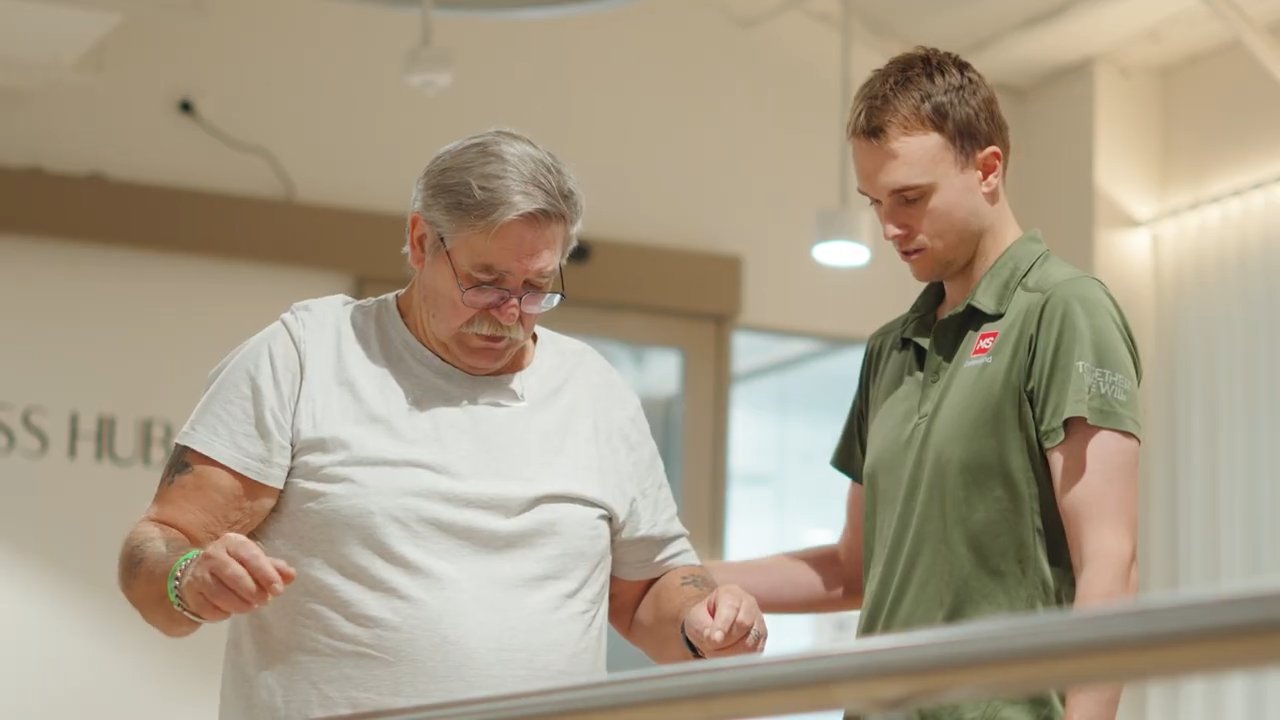
With the support of MS Queensland’s expert teams, Daryl was accepted into the NDIS and could finally access tailored supports to improve his strength, mobility, balance and overall wellbeing.
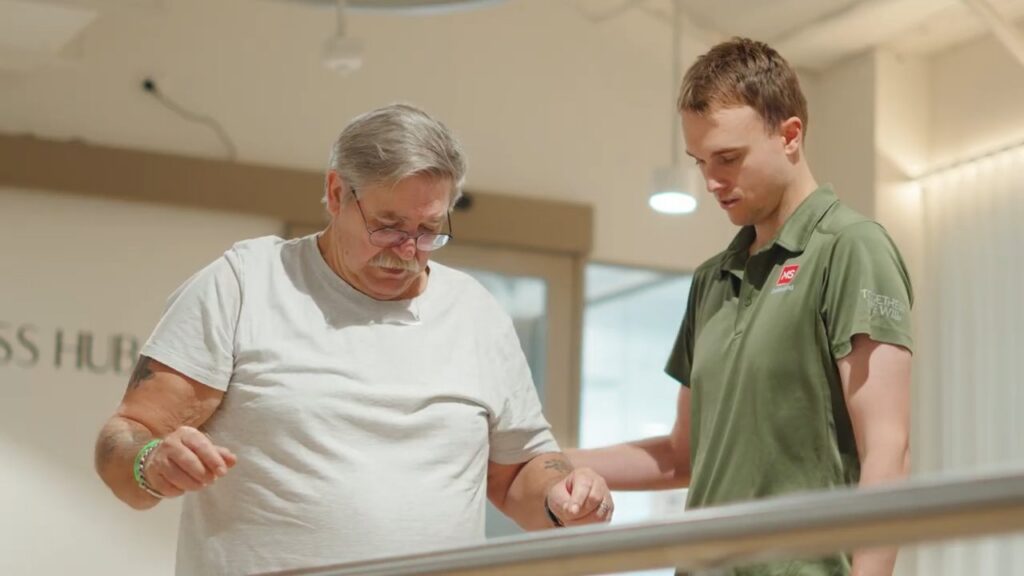
“I started working with an exercise therapist and physiotherapist. Without their help I would be stuffed.
“Whatever I learn at the Neuro Wellness Hub I bring home and practice. From using a wheelie walker, I now use a walking stick. And from having more than a dozen falls a day – sometimes right up to 20 – I might now have maybe five in a week,” Daryl said.
And it’s not just about the physical impacts of support, Daryl says, it’s what it means for your mental and emotional health and your outlook on life.
“I’d lost all my confidence, my friends, my hobbies. Now, I use a mobility scooter to get myself out of the house and down to the doctor, the chemist, the IGA to do my lotto.
“Without MS Queensland’s help and guidance, and the work of their neuro therapists, I would still be in the same position, or worse – constantly falling, feeling like my life was over.”
“We used to have a lot of friends, but after my strokes they didn’t know how to talk to me, because I couldn’t communicate properly. From being keen motorbike riders, I had to hand my license in, sell all our bikes and all our gear.
“I still have the conditions I have, and I do still get embarrassed when we’re out somewhere and my tremors start, but at least now I feel like I’m moving forward instead of backwards.
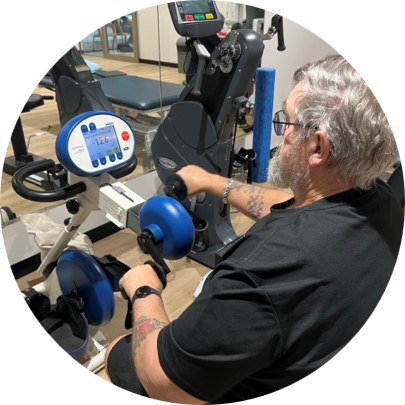
Without MS Queensland and the Neuro Wellness Hub behind me and pushing me, I’d still be living at home like a hermit.”
While he has a deep appreciation for the team’s expertise, Daryl says that’s not where their impact ends.
“They treat you more like family than a Participant. As soon as I arrive at the Neuro Wellness Hub, they make me a coffee, someone will always come over to say hello and a chat, the CEO will give me a wave, and I always have a laugh during my therapy.
“It’s a great place to be.”
“Like I said, I was in a dark spot but now, with their help, I’m out there putting one foot in front of the other. I couldn’t be more grateful.”
Related posts
Is Telehealth Effective for Neurological Allied Health Appointments?
Meet Michaela: Supporting Employment Pathways in Bundaberg & Wide Bay-Burnett Region